


Reducing Visa Rejections with Automated Verification
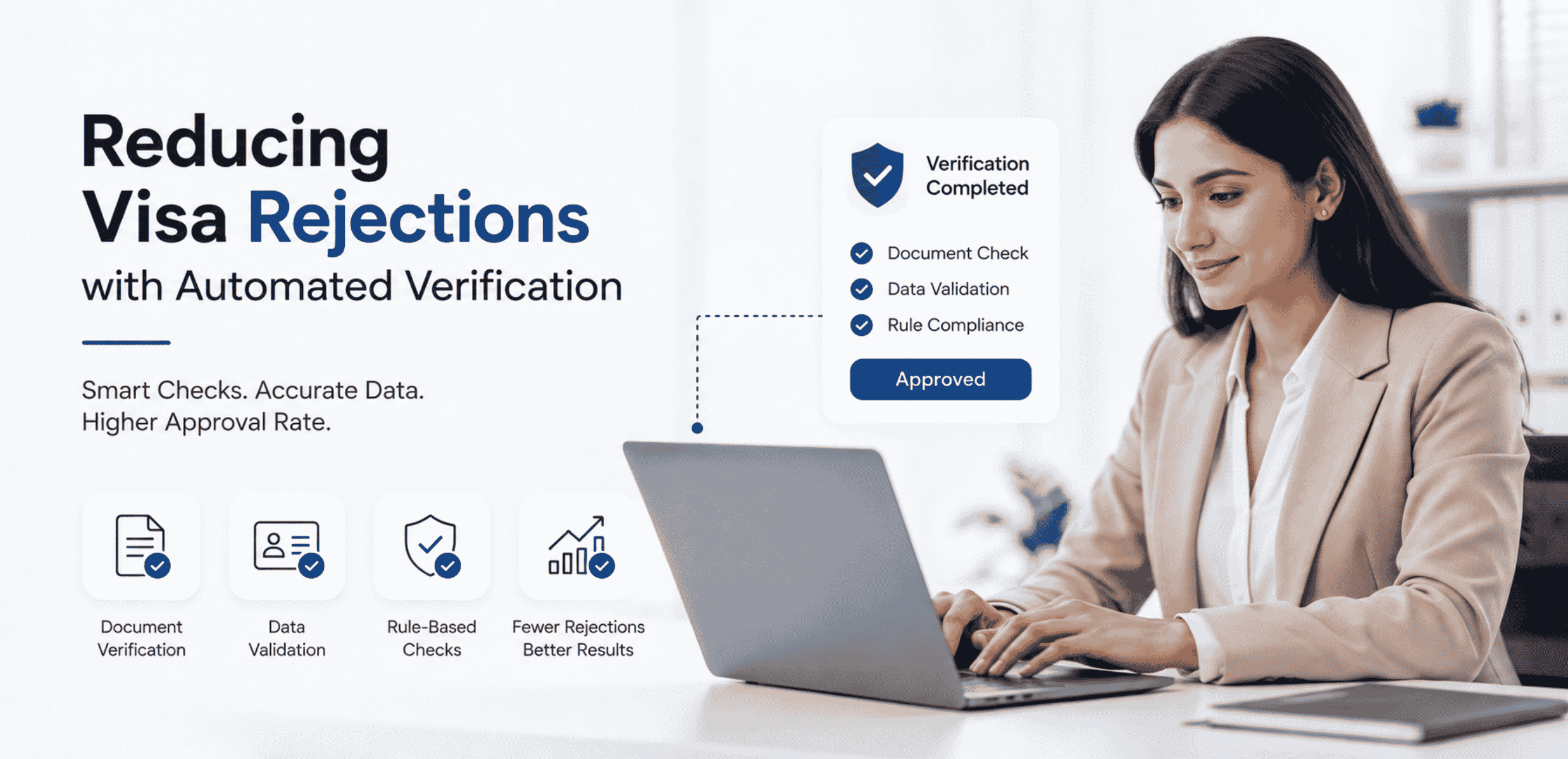
Reduce visa rejections with automated verification. Learn how AI passport scanning, eligibility checks, document cross-verification, and automated follow-ups help visa agencies minimize errors, save time, and deliver a smoother client experience.
Visa rejections cost agencies more than a single lost application. They cost client trust, staff hours, and repeat business. For visa consultants, travel agents, and visa-business entrepreneurs handling dozens of applications a week, the real problem is rarely a lack of effort it's manual, error-prone verification that lets small mistakes slip through. This is where automated visa processing is changing how agencies work, replacing manual document checks with structured, technology-driven verification at every stage of the application.
This article looks at why rejections happen, how visa automation software reduces the most common errors, and what an automated verification workflow actually looks like inside a modern visa agency.
Why Do Visa Applications Get Rejected?
Most rejections are not caused by ineligibility they're caused by preventable errors introduced during manual processing. Common causes include:
- Incomplete or missing supporting documents
- Data mismatches between the passport, application form, and supporting paperwork
- Expired passports or documents that don't meet validity requirements
- Inconsistent information across multiple forms submitted by the same applicant
- Missed deadlines caused by manual follow-up gaps
- Incorrect visa category selection for the applicant's travel purpose
Each embassy and consulate sets its own eligibility rules, and requirements can change with little notice. When an agency relies on spreadsheets, email threads, and manual data entry to track this, small inconsistencies compound quickly and the applicant pays the price with a rejection or a request for resubmission.
What Is Automated Verification in Visa Processing?
Automated visa processing uses software to check application data, scan documents, and flag inconsistencies before an application is submitted rather than relying on a staff member to catch every issue by eye. In practice, this typically combines three capabilities:
1. AI Passport Scanning and Data Extraction
An AI passport scanner reads the machine-readable zone (MRZ) and biographic page of a passport, then auto-populates the applicant's details into the application. This removes manual typing errors and instantly flags passports nearing expiry or with damaged, unreadable data fields a leading cause of avoidable rejections.
2. Visa Eligibility and Policy Checking
A visa eligibility checker cross-references the applicant's profile, travel purpose, and destination country against current visa category rules, helping staff select the correct visa type and identify missing documents before submission rather than discovering the gap after the embassy responds.
3. Document and Application Cross-Verification
Visa document automation compares data across every submitted document passport, application form, invitation letters, financial proof so mismatched names, dates, or addresses are caught automatically instead of during a final manual review under time pressure.
How Automated Verification Reduces Rejection Risk
When these three layers work together inside a single visa processing platform, agencies see fewer errors reach the embassy stage. Here is how the workflow typically improves outcomes:
Consistent Data Across Every Document
Once passport data is extracted once, it's reused consistently across every form and document, eliminating the manual re-entry that introduces typos and mismatches.
Real-Time Eligibility Flags
Instead of discovering an eligibility issue after submission, staff receive alerts at the point of data entry while there's still time to correct the application or request additional documents from the client.
Structured Document Checklists
A visa CRM tied to automated verification can generate a document checklist specific to the visa category and destination, so nothing is submitted incomplete.
Automated Follow-Up
Visa follow-up automation ensures clients are reminded to submit missing documents or renew expiring passports well before deadlines, reducing rejections caused by late or incomplete submissions.
Audit Trail and Version Control
Every change to an application is logged, so agencies can see exactly what was submitted and when useful both for quality control and for resolving disputes with clients.
What an Automated Verification Workflow Looks Like
- Document intake: The client uploads their passport and supporting documents through a branded client portal.
- AI extraction: The passport OCR software reads and auto-fills applicant data.
- Eligibility check: The system checks the applicant's profile against the destination's current visa policy.
- Cross-document verification: All submitted documents are compared for consistency.
- Checklist confirmation: Staff confirm all required documents are present before submission.
- Submission and tracking: The application is tracked through a visa application tracking software dashboard, with automated status updates sent to the client.
This structured flow doesn't just reduce rejections it also cuts the time staff spend on repetitive manual checks, freeing them to focus on higher-value client advisory work.
Why Agencies Are Moving Away from Manual Processing
Agencies handling a high volume of applications across multiple countries and visa categories find that manual processes simply don't scale. A white label visa platform built around automated verification allows an agency to:
- Process more applications with the same team size
- Maintain consistent quality across multiple staff members and branches
- Give clients real-time visibility into their application status
- Reduce the operational cost of resubmissions and rework
- Build a more predictable, professional client experience under their own brand
It's worth being clear about what automation can and cannot do: no software can guarantee visa approval, since final decisions rest entirely with the relevant embassy or consulate. What automated verification does is remove the preventable, process-driven errors that account for a large share of avoidable rejections, giving every application the strongest possible starting point.
Choosing the Right Automated Verification Tools
When evaluating a visa automation platform, look for:
- Accurate, fast passport OCR with expiry and validity checks
- Configurable eligibility rules that can be updated as policies change
- A centralized visa CRM for tracking leads, clients, and applications in one place
- Automated client communication via WhatsApp, SMS, or email
- White-label branding so the client experience reflects your agency, not a third-party tool
- Clear audit trails and role-based access for your team
Reduce Rejection Risk with a Smarter Verification Workflow
Manual verification will always carry a margin for human error. Agencies that adopt automated visa application processing give every file a consistent, rules-based check before it ever reaches the embassy, reducing resubmissions, saving staff time, and giving clients a more reliable experience.
See how Visakix combines AI passport scanning, eligibility checks, and a built-in visa CRM into one automated workflow.
Book a Demo | Start Your Free Trial
Frequently Asked Questions
What causes most visa rejections?
Most rejections stem from preventable process errors incomplete documents, data mismatches, expired passports, or incorrect visa category selection rather than genuine ineligibility.
Can automated verification guarantee visa approval?
No. Approval decisions are made solely by the relevant embassy or consulate based on their own criteria. Automated verification reduces preventable errors in the application itself; it does not influence or guarantee the outcome of the government's review.
How does an AI passport scanner help reduce errors?
It extracts passport data directly from the document's machine-readable zone, removing manual typing errors and flagging expired or damaged passports before submission.
Is automated verification suitable for small visa agencies?
Yes. Agencies of any size benefit from reduced manual data entry and fewer resubmissions. Many platforms, including white-label options, scale from solo consultants to multi-branch agencies.
Does automated verification replace staff expertise?
No. It handles repetitive data checks so staff can focus on advisory work, client communication, and handling edge cases that require judgment.